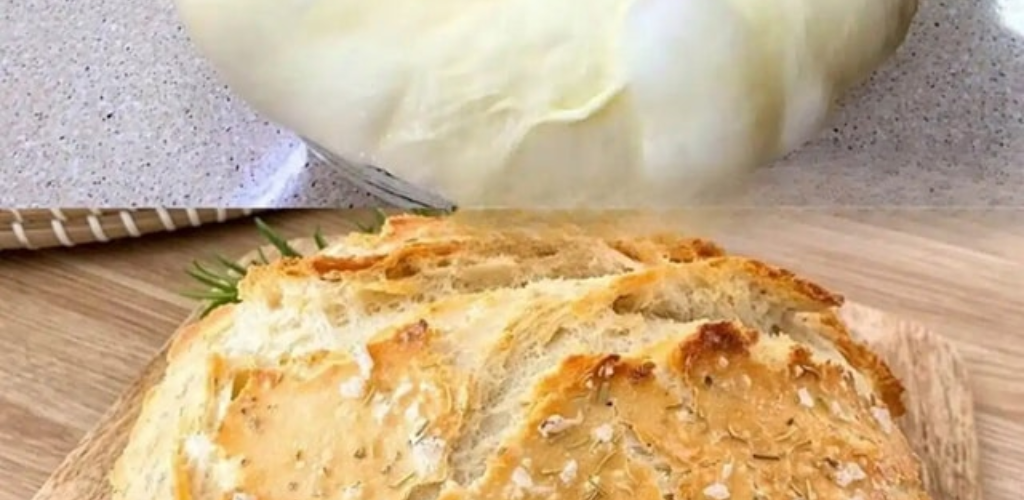
Ingredients
350 g wheat flour (type 550)
150 g wholemeal spelled flour
120 g spelled flour (type 630)
15g of salt
10 g bread seasoning
450 ml of water
15g dry yeast
2 tablespoons
AD white wine vinegar
preparation
First, preheat the oven to 220°C top and bottom and place a bowl of water at the bottom of the oven.
Now heat the water to a warm temperature, not too hot, otherwise the dry yeast will not work and will burn!
Place the dry ingredients in a bowl and mix.
Now start stirring with the dough hook of the food processor, add the vinegar to the warm water and add the water/vinegar mixture while stirring.
You can also use the dough hook on your stand mixer.
If the dough can be easily removed from the edge of the bowl, it is fine.
Then don’t knead it anymore, just shape it gently.
Sprinkle a little flour in a heat-resistant ovenproof pan, casserole dish or Roman pot and place the bread dough on top, cut as desired with scissors or a knife and bake for 40 to 45 minutes.
The bread gets bigger during the baking process.
After 40 minutes, reduce the temperature to 180°C and remove the bowl of water from the oven.
Be careful and don’t burn yourself.
It’s best to use potholders or baking gloves to help.
Now bake for another 30 minutes.
Then, after the cooking time has passed, remove the pan with the bread from the oven and let it cool a little.
If you can handle the bread, place it on a wire rack to cool faster.
You can also test how well the bread is baked by tapping the bottom. If it sounds hollow, it means it is well baked.
TIP: Why didn’t I know this trick for baking bread?
The vinegar in the dough neutralizes the yeast flavor. For quick breads without proofing time, a little more is always needed.
At the same time, vinegar also makes bread last longer and prevents it from molding so quickly.