
Aluminum foil is widely used in French kitchens, both for cooking and storing food. It can also be used to sharpen worn scissors, scrub a dirty plate or grill, or improve the efficiency of your radiator. However, its use is controversial because we often hear that aluminum foil is dangerous to health. Therefore, to protect yourself from these potential dangers, it is advisable to use them correctly. As is often the case, it is very important to know and use everyday objects well. To avoid the most harmful pitfalls that can pose a health risk, here are the mistakes you should never make with aluminum.
Aluminum: Is it really that harmful to health?
In the kitchen, aluminum is used to preserve and prepare some dishes (fish in foil, grilled Camembert, potatoes in a wood-fired oven, etc.). However, according to some unreliable media, aluminum causes Alzheimer’s disease, accumulates in bones or causes pulmonary fibrosis. In reality, these statements are very alarming, given our current knowledge on the subject.
Food preservation with aluminum
ANSES also explains that “the toxic effects of aluminum mainly affect the central nervous system (encephalopathy, psychomotor disorders) and bone tissue”. common foods or health products.” In fact, adverse clinical effects were mainly observed at high levels of chronic exposure (dialysis, etc.). However, EFSA has established a tolerable weekly intake of aluminum in food, and this limit is very rarely exceeded in children (1.6%) and adults (0.2%).
Given that it is difficult to accurately calculate our aluminum consumption, taking some daily measurements remains a good precautionary principle to avoid excesses. So stay tuned!
Make sure no mistakes are made with aluminum
1) Store acidic foods in aluminum? Bad idea !
Tomatoes, vinegar, citrus fruits (lemon, orange, grapefruit, etc.)… Acidic foods and aluminum do not mix well because aluminum oxide does not tolerate them. In fact, contact and mixing with acid promotes the migration of aluminum particles towards the food. Also, for anything acidic, consider using plastic wrap or an airtight box.
2) Heating aluminum: one of the mistakes you should never make
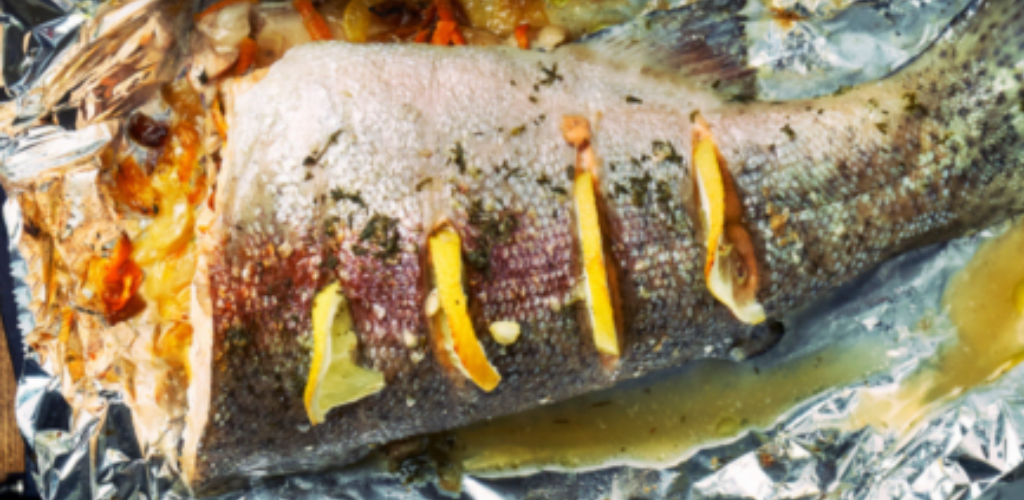
Fish in an aluminum pan
We are talking about a neurotoxicant that does not tolerate heat. Furthermore, it is obviously not recommended for any type of cooking (papillotes, etc.). You can definitely use parchment paper to make a salmon or herring papillote! It should also be avoided using it in the microwave, as possible sparks could cause fires.
3) Store your refrigerated food in aluminum: Limit
In the kitchen, aluminum represents unnecessary additional waste because it is easily replaceable. Contact between aluminum and food should also be limited as much as possible to reduce the risk of traces of metal in food. To store your food in the refrigerator, choose alternative solutions: wax packaging, plastic boxes, etc.
4) Do you use aluminum to color? Only if you want to burn your hair!
Aluminum hair coloring
If you tie your hair up, there is already a risk that it will overheat and therefore burn. However, aluminum should be avoided, especially for sensitized and brittle hair. Aluminum actually promotes color oxidation, which further damages damaged hair. This is why many hairdressers use plastic wrap. Combined with the oxidizing agent contained in the coloring, it is less harmful to the hair fiber. Avoid using as household paint. Leave it to the professionals who know your hair type and know what they are doing!
5) One of the errors also affects salt and seasonings:
contact between salt and aluminum releases ions into the food that can be harmful. Therefore, it is best to limit its use to savory preparations. Furthermore, a study by the American University of Sharjah showed that aluminum easily penetrates spices. Therefore, this should be avoided when storing spices.
Good to know: contrary to what you might think, the two sides of aluminum are not different. If there are differences in gloss between the two sides, this is due to the production of this metal foil. Because it is extremely thin, manufacturers simply overlap two sheets to avoid the risk of tearing.