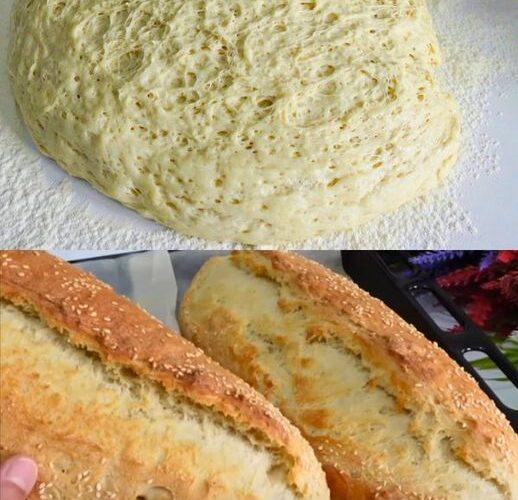
Fresh and Simple Ingredients
To begin this culinary journey, you’ll need to gather the following fresh, simple ingredients that you probably already have in your pantry:
- 200ml hot water
- 10 g dry yeast
- 120 grams of flour
- 200 ml of warm water
- 360 grams of flour
- 1 teaspoon salt (8 g)
- 10 ml vegetable oil
- 1 teaspoon flour (20 g)
- 40 ml cold water
- Sesame seeds (for sprinkling)
Step by Step Preparation
- Activating the Yeast : In a bowl, mix the hot water and dry yeast. Stir well until the yeast is completely dissolved.
- First Mixture : Add 120 g of flour to the mixture and stir until smooth.
- Initial Rest : Cover the bowl and let the mixture rest for 20 minutes so the yeast can do its magic.
- Second Mixing : After 20 minutes, mix the dough again and add warm water. Mix well.
- Adding Key Ingredients : Add 360 g of flour and salt to the mixture. Continue mixing until there are no flour lumps left.
- Final Touch : Add the vegetable oil and mix again until you obtain a soft and elastic dough.
- Final Rest : Cover the bowl and let the dough rest for another 20 minutes so that the flavors integrate.
- Forming the Loaves : Sprinkle a surface with flour and place the dough on it. Divide the dough into two equal parts and shape each one into a loaf.
- Preparing to Bake : Place the loaves on a baking sheet lined with parchment paper. Cover again and let it rest for 10-15 more minutes.
- Final Touch : Meanwhile, preheat the oven to 180°C.
- Decorating and Baking : In a small bowl, mix flour and cold water. Grease the loaves with this mixture, make decorative cuts on the surface and sprinkle sesame seeds.
- Baking Time : Place the loaves in the preheated oven and bake for 30 minutes or until golden brown.
- Ready to Enjoy! : Once ready, take the breads out of the oven and let them cool slightly before serving. And now, let’s enjoy the delicious freshly made Turkish bread!
Tips for Perfect Preparation
To ensure the success of your culinary adventure, here are some helpful tips:
- Activate the Yeast Well : It is crucial to completely dissolve the yeast in the hot water to ensure that it activates properly and the dough rises properly.
- Proper Resting : During resting periods, be sure to cover the dough properly to prevent it from drying out and for the flavors to fully develop.
- Well Floured Surface : When working the dough and shaping it, sprinkle enough flour on the surface to prevent sticking and to make handling easier.
- Decorative Cuts : Don’t forget to make decorative cuts on the surface of the breads before baking them. This not only adds visual flair, but also allows the bread to expand evenly during baking.
By following these tips, you’ll be on your way to making perfect, golden, irresistible Turkish breads!
Frequently Asked Questions (FAQs)
1. Can I use fresh yeast instead of dry yeast? Yes, you can replace dry yeast with fresh yeast in a 1:3 ratio. That is, if the recipe calls for 10 g of dry yeast, you can use 30 g of fresh yeast.
2. What can I do if the dough is too sticky? If the dough is too sticky, add a little more flour, a tablespoon at a time, until it reaches the desired consistency.
3. Can the dough be frozen for later use? Yes, you can freeze the dough once it is formed into loaves. Wrap it tightly in plastic wrap and then in aluminum foil before freezing. When you’re ready to use it, defrost it in the refrigerator overnight and then follow the usual baking steps.
4. How can I tell if the bread is completely baked? An easy way to check if the bread is ready is to tap the bottom. It should ring hollow. Also, the top should be golden and crispy.
5. How long does fresh bread keep? Homemade Turkish bread stays fresh for about 2-3 days if stored in an airtight container at room temperature. You can also refrigerate it to prolong its freshness.
I hope these questions and answers help you master making this delicious Turkish bread! If you have more questions, don’t hesitate to ask!